
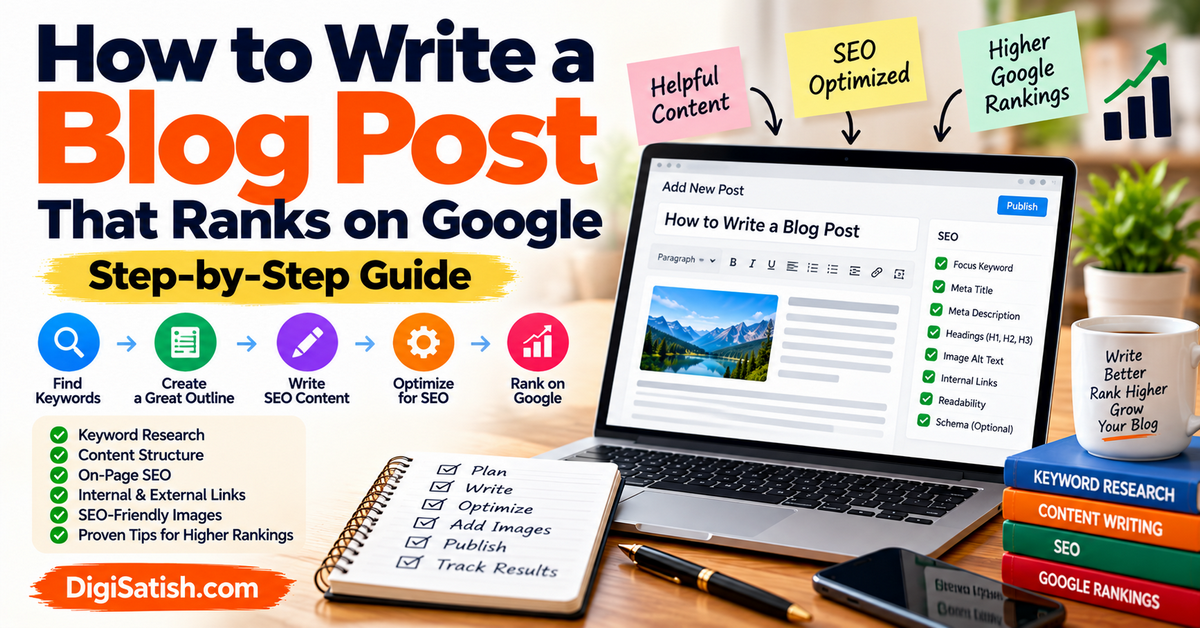
Featured Snippet Definition: Writing a blog post means planning, researching, and publishing helpful content on a blog. A good blog post starts with a clear topic. It includes headings and structured sections. The content is also optimized for search engines. This ensures readers can easily find and understand the content.
You might be starting a blog from scratch. Alternatively, you could be looking to improve your existing content. In either case, it is essential to learn to write posts that people actually read. Creating content that people want to share is the single most valuable skill you can develop as a blogger.
You’ve decided to start a blog — great. But now you’re staring at a blank screen, not sure where to even begin. Writing a blog post sounds simple until you actually try it.
Without a clear process, most beginners end up with posts that ramble. They fail to rank in search engines. As a result, they attract very few readers.
A well-structured blog post is a powerful tool. It helps in building an audience. It supports growing a business. It also assists in establishing yourself as an expert online.
Blog posts drive organic traffic. They build trust with readers. They compound over time. A post you write today can bring in visitors for years.
In this step-by-step guide, you’ll learn how to write a blog post from scratch. You will start by choosing the right topic. Then, you will perform keyword research. Next is formatting your content and adding visuals. You will also edit for quality and optimize for SEO.
Whether you’re writing your first blog post or you want to sharpen your blogging for beginners foundation, this guide is for you. It covers everything you need.
What Is a Blog Post?
Before writing your blog, it’s helpful to understand what a blog post is. Knowing what makes a blog post effective is also beneficial. This foundation will shape every decision you make throughout the writing process.
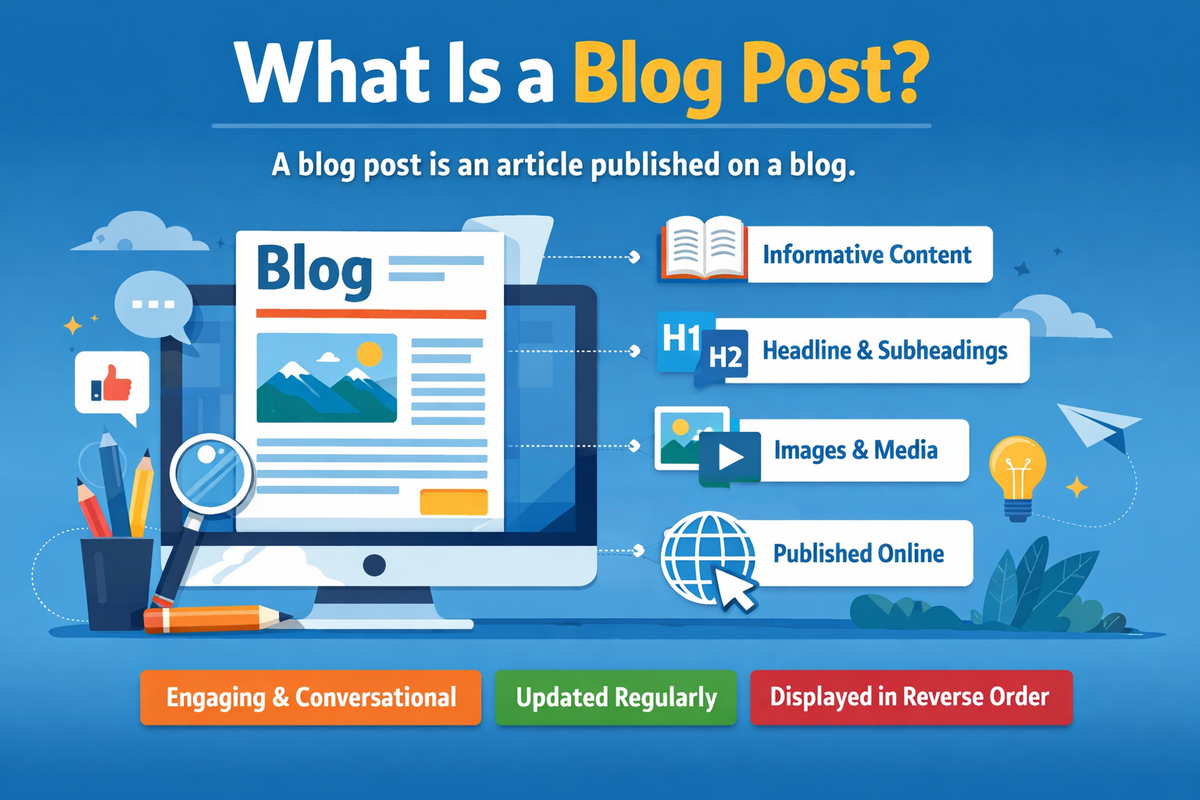
Definition of a Blog Post
A blog post is a piece of content published on a blog. It is typically an article covering a specific topic in a conversational style. The article is informative.
Blog posts are displayed in reverse chronological order on a blog. The newest content appears first.
They can range from a few hundred words to several thousand, depending on the subject and goals of the writer.
Unlike a static web page that rarely changes, a blog post is part of an ongoing stream of content.
Every blog post that helps your audience builds your site’s authority. It improves your chances of ranking in search engines over time.
Different Types of Blog Posts
Understanding the type of blog post you want to write is the first step in the writing process. Here are the most common types
- How-to guides: Step-by-step instructions that teach readers how to accomplish something specific. These rank well because they directly answer “how-to” search queries.
- List posts: Structured as numbered or bulleted lists (e.g., “10 Ways to Improve Your Writing”). Easy to read, easy to share.
- Tutorials: In-depth walkthroughs that guide readers through a complex process, often with screenshots or examples.
- Opinion posts: Share your perspective on a topic. These build personal brand and generate conversation but require a confident, authentic voice.
Key Elements of a Successful Blog Post
No matter the type of blog post you’re writing, certain elements appear in every really good blog. These elements include a compelling headline and a strong introduction. They also have organized body content with clear subheadings. Additionally, relevant visuals and a conclusion with a call to action are important. We’ll cover each of these in detail throughout this guide.
Why Writing a Good Blog Post Is Important
If you’re thinking about starting a blog or already have one, you need to understand why post quality matters. This understanding will help you write the best blog content possible.
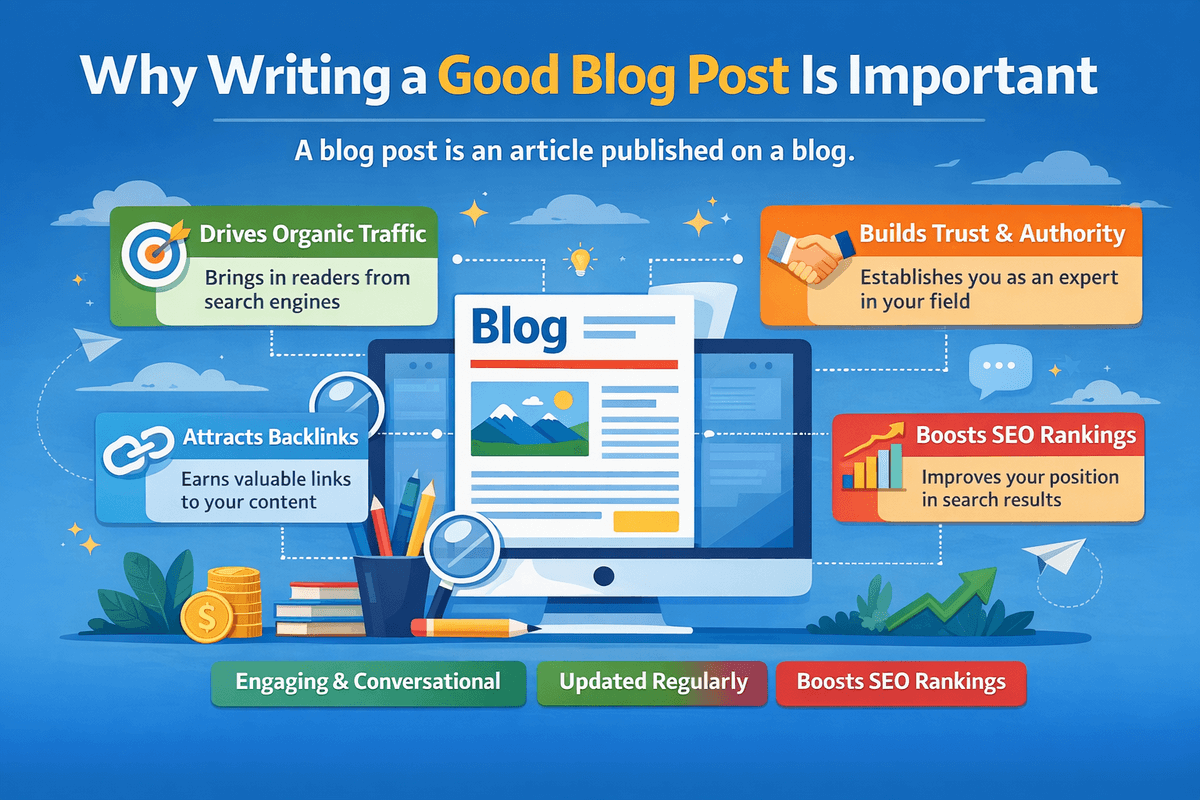
A well-written post doesn’t just inform. It builds authority. It attracts links to your blog post. It keeps readers coming back.
1. Benefits of Blogging for Individuals and Businesses
Whether you’re a solo creator or running a blog for your business, the benefits are significant.
Blogging builds your authority in a niche. It creates a library of helpful content. Additionally, it gives you an owned platform that isn’t dependent on any social media algorithm.
For businesses, every blog post is a potential entry point for a new customer.
2. How Blog Posts Drive Traffic and Engagement
Each new blog post gives search engines another page to index. Over time, a library of well-optimized blog posts acts like a magnet, pulling in readers searching for answers on Google. Blog posts also give you content to share across social media and email newsletters, compounding your reach. Engaging blog content keeps readers on your site longer, which is a positive signal to search engines.
3. How High-Quality Content Improves SEO Rankings
Google’s EEAT framework — Experience, Expertise, Authoritativeness, and Trustworthiness — is the standard for content quality in 2026.
Blog posts that demonstrate real expertise earn higher rankings. They include original insights. They also thoroughly cover a topic. These posts perform better than generic, thin content.
Writing amazing blog posts that genuinely help readers is no longer just good practice — it’s an SEO requirement.
High-quality blog posts that include real experience, examples, and expert insights have a better chance of ranking higher. This is particularly true in Google search results.
How to Write a Blog Post (Step-by-Step Guide)
This section will help you write an amazing blog post every single time.
Follow these steps in order. You’ll have a clear, repeatable system to make your blog post stand out. This applies whether it’s your first or your fiftieth post.
Here’s exactly how to write a blog post from idea to published article.
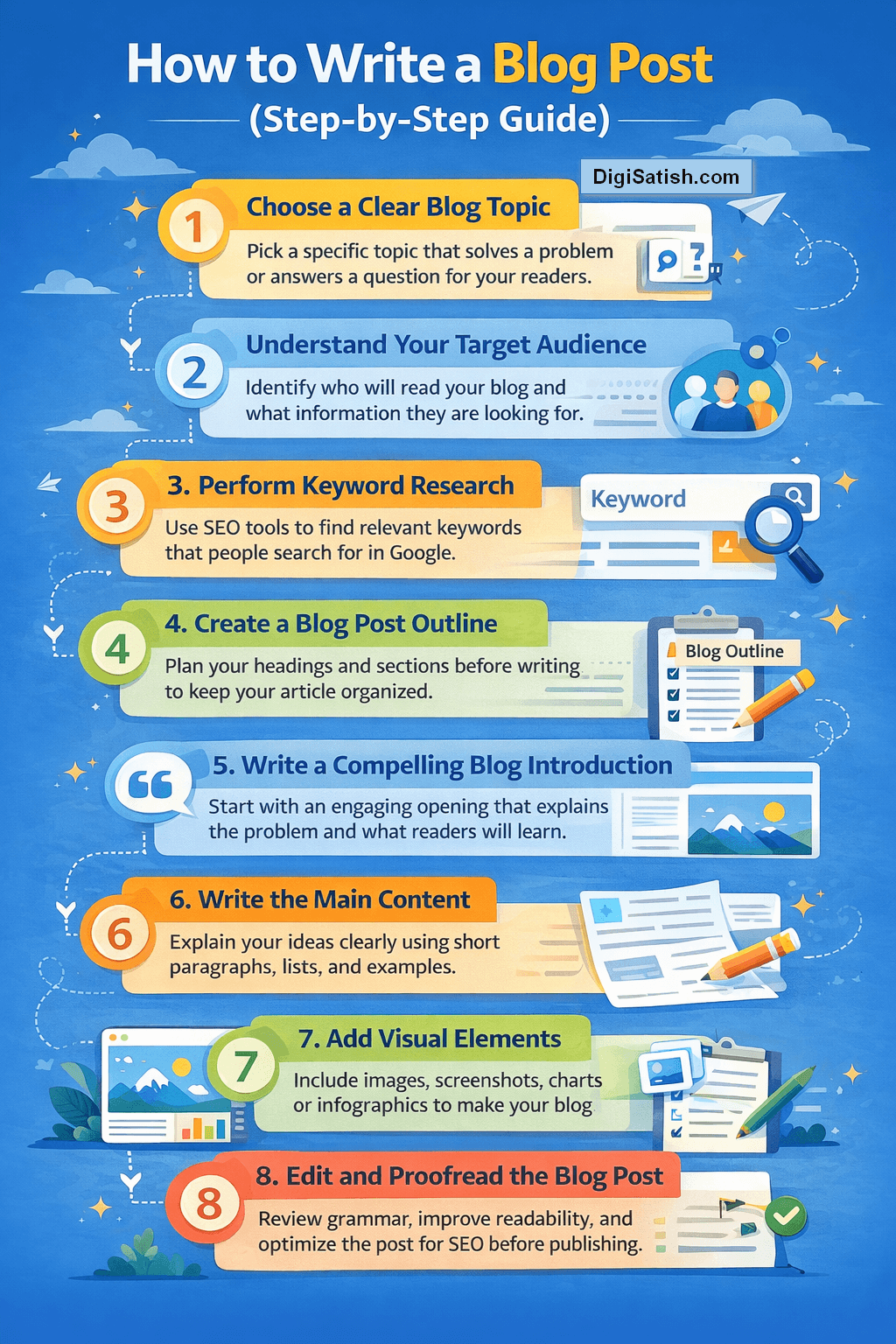
Follow these steps every time, and your writing process will become faster and more consistent.
Step 1: Choose a Clear Blog Topic
The foundation of every great blog post is a well-chosen blog post topic.
Start with your audience: what problems are they trying to solve? What questions do they type into Google? Write about topics your audience actively searches for. Doing so sets you up for organic traffic from day one.
To brainstorm blog post ideas, look at competitors’ blog posts in your niche. Browse Reddit or Quora for recurring questions. Simply think about what you wished existed when you were learning your subject. Keep a running list of ideas so you’re never stuck staring at a blank page.
Step 2: Understand Your Target Audience
Before you start writing a blog post, get clear on who you’re writing for. A blog post that helps a complete beginner looks very different from one aimed at an experienced professional.
Knowing your reader’s skill level, goals, and pain points lets you frame content that feels personally written for them.
Ask yourself: What does my reader already know? What outcome do they want? What misconceptions might they have? Answering these questions shapes every sentence you write and ensures your blog content delivers real value rather than generic information.
Step 3: Perform Keyword Research
Keyword research is the process of identifying the specific search terms your audience uses to find content like yours.
If you want your blog post to rank in a search engine, you need to know what words to use. You also need to understand where to place them.
Use free tools like Google Keyword Planner or Ubersuggest to find your primary keyword and related terms.
As a beginner, focus on long-tail keywords. Use specific phrases like “how to write a blog post for beginners.” Avoid short, highly competitive terms.
Using keywords naturally throughout the post for search engines is the goal: it should never feel forced or robotic.
Step 4: Create a Blog Post Outline
Outlining your blog post before you write a single word is one of the highest-leverage habits you can develop. A solid outline forces you to organize your thinking. It helps you identify gaps. It ensures the post flows logically from introduction to conclusion. Writing becomes much faster. You’re filling in a structure rather than figuring it out as you go.
A basic blog post outline looks like this:
- H1: Post title with primary keyword
- Introduction (hook, context, what the reader will learn)
- H2 Sections (major topics, each with 2-3 H3 subsections)
- Conclusion (summary + call to action)
- FAQ (optional, great for SEO)
To speed up the research and outline phase without sacrificing tone, consider using Claude AI for drafting before applying manual edits.
Step 5: Write a Compelling Blog Introduction
Your introduction has one job: keep the reader reading. Most people decide within the first few sentences whether a post is worth their time.
A great blog post starts with a hook. This could be a relatable problem, a surprising statistic, or a bold statement. Then, it provides a brief explanation of what the post will cover and why it matters.
Keep it concise. Two to four short paragraphs are ideal. Don’t bury the point or over-explain before you’ve earned the reader’s trust. Get to the value quickly.
o speed up your workflow and eliminate typos before publishing, draft your article using one of the best writing apps for content creators like Scrivener, Ulysses, or Grammarly.
Step 6: Write the Main Content
This is the meat of your blog post. It is the body of the post where you deliver on the promise of your headline.
Organize your ideas using H2 and H3 subheadings so readers can scan the article and find exactly what they need.
Use short paragraphs of two to four sentences. Long, dense paragraphs are intimidating on screen and increase bounce rates.
When writing the blog post, aim to cover the topic thoroughly without padding for the sake of length. Every paragraph should earn its place.
If you’re not sure your blog post is one that people would actually save or share, revise until it is.
Step 7: Add Visual Elements
Images in your blog posts serve two important purposes. They break up walls of text, making reading easier. They also reinforce your points visually.
Use screenshots for tutorials, infographics for data, and relevant photos to add context. Every image should include descriptive alt text. This helps with accessibility. It gives search engines another way to understand your content.
Free tools like Canva make it easy to create custom blog graphics without design experience. Stock photo sites like Unsplash and Pexels offer high-quality images at no cost.
Step 8: Edit and Proofread the Blog Post
Publishing without editing is one of the most common blog writing mistakes beginners make. After you finish your draft, step away for at least an hour before editing.
Fresh eyes catch errors that your writing brain glosses over. Read your post aloud to spot awkward phrasing and run-on sentences.
Use Grammarly to catch grammar and spelling errors, and the Hemingway Editor to simplify overly complex sentences.
Always proofread your post one final time before hitting publish. Make sure your blog post is one that you’d be proud to show an expert in your field.
Many professional bloggers follow a structured writing process. It helps them publish consistently. A structured process allows them to create blog posts that rank in search engines.
How Long Does It Take to Write a Blog Post?
The time it takes to write a blog post varies. It depends on the topic, research requirements, and your experience as a writer. For beginners, writing a high-quality blog post usually takes 3 to 6 hours from start to finish.
This time typically includes several steps in the writing process, such as:
- Choosing a blog post topic
- Performing keyword research
- Creating a blog post outline
- Writing the introduction and body content
- Adding images or visual elements
- Editing and proofreading the article
- Optimizing the blog post for SEO
Experienced bloggers often complete this process faster because they already have a clear workflow and writing routine. However, beginners may take longer while learning how to structure content and optimize their posts.
Instead of rushing, focus on writing a clear, helpful, and well-structured blog post. Over time, as you publish more content, your writing speed and efficiency will naturally improve.
Blog Post Structure Explained
To write a clear, high-performing article, you need to understand what your post must include at each stage.
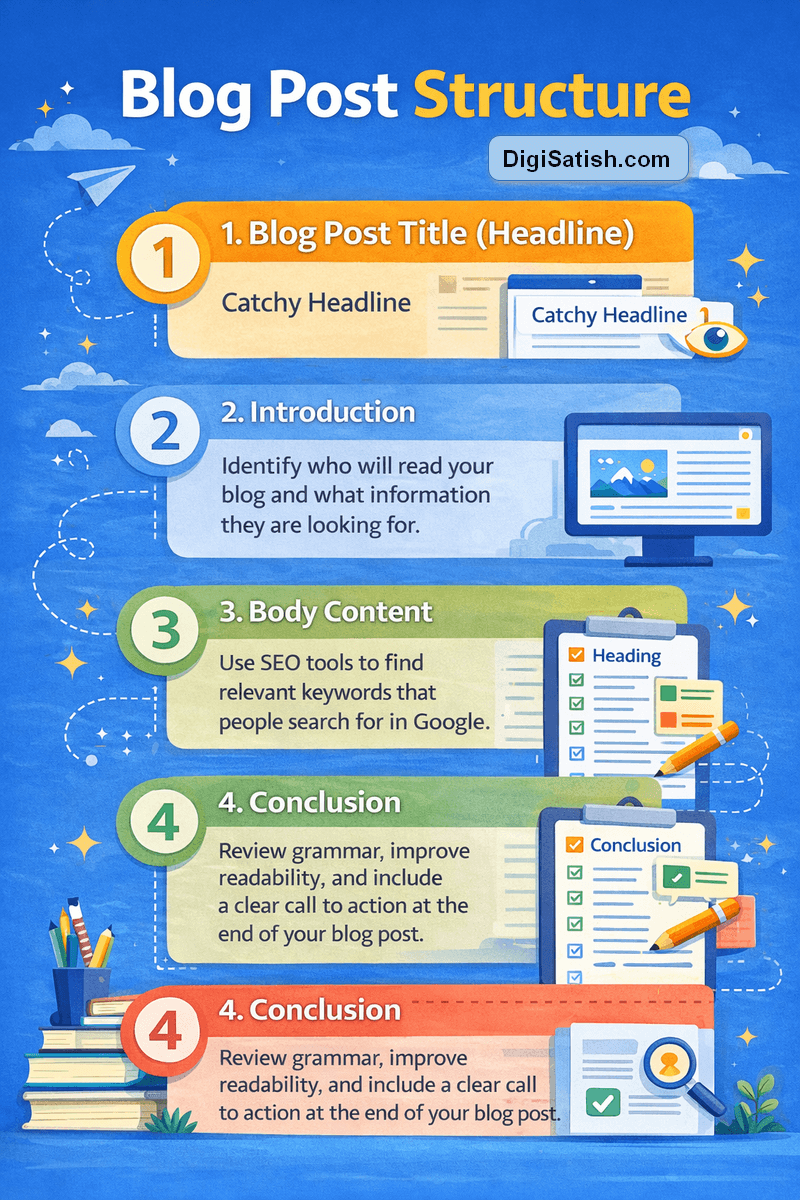
A consistent structure allows you to bring your blog post together cohesively. It helps readers understand what your post covers before they’ve even finished reading it.
1. Blog Post Title (Headline)
Your blog post title is the first thing people see in search results and on social media. It needs to be clear, specific, and compelling.
Include your primary keyword near the beginning of the title.
Use numbers when appropriate (“7 Ways…”), and promise a specific outcome (“…That Actually Work”). A strong blog post title is what separates a click from a scroll-past.
2. Introduction
The intro hooks readers immediately. Reference the reader’s pain point, establish credibility, and clearly set up what the post will deliver.
A reader who finishes your intro should feel “Yes, this is exactly what I was looking for.”
3. Body Content
The body is where you deliver value. Organize information clearly using H2 and H3 headings. Each section should cover one core idea.
Use transitions between sections so the entire blog post reads as a cohesive whole rather than disconnected fragments.
Links to your blog post’s related content (internal linking) also help readers explore your site further.
4. Conclusion
Summarize the key takeaways from the post and tell readers what to do next. A strong call to action provides readers with direction. Examples include “Leave a comment,” “Download the free tool,” or “Read the next post.” Never end a blog post without one.
10 Tips for Writing an Engaging Blog Post That Readers Love
Great ideas for blog posts are just the starting point.
To make your post truly connect with readers, you must make it easy to read. It should be enjoyable to consume and impossible to stop scrolling through. These practical tips will help you do exactly that.
Creating an engaging blog requires more than just good information. Here are practical tips to make your blog content stand out:
- Use simple language: Write like you’re explaining to a smart friend, not submitting an academic paper. Clear, direct writing is always more engaging.
- Write short paragraphs: Break up text into 2–4 sentence chunks. White space makes reading feel effortless.
- Use bullet points and lists: Lists are scannable and reader-friendly. Use them wherever steps or comparisons are involved.
- Add real-world examples: An example of a blog post topic explained with a real scenario is always more useful. It is more useful than an abstract description.
- Maintain a conversational tone: Writing amazing blog posts means writing like a human. Use contractions, ask questions, and speak directly to your reader.
- Use AI tools wisely: AI tools like ChatGPT and Claude can help you brainstorm. These tools can assist in outlining and drafting content quickly. However, always add your personal voice. Include your real expertise on top.
- Use clear headings and subheadings: Organize your content using H2 and H3 headings. This allows readers to scan your blog post easily. Clear headings also help search engines understand the structure of your article.
- Add relevant visuals: Images, screenshots, charts, and infographics make your blog post more engaging. Visual elements break up long sections of text and help readers understand complex ideas faster.
- Start with a strong introduction: Your introduction should quickly explain the problem your reader is facing. It should also outline what they will learn in the article. A strong opening encourages readers to continue reading the rest of the post.
- End with a clear call to action: Every blog post should guide readers toward the next step. Ask them to leave a comment, share the article, subscribe to your newsletter, or read another related blog post.
Common Blog Writing Mistakes to Avoid
You know you need to edit your blog post carefully. You follow a structured process. Still, certain mistakes sneak through consistently.
Knowing what to watch for is just as important as knowing what to do right. This is especially true when you’re writing your next post and have a few posts under your belt.
1. Writing Without a Clear Structure
A blog post without structure is hard to read and hard to rank. Without clear headings, logical flow, and a defined goal, readers get lost and leave.
Always create an outline before you write the blog post. This ensures your structure is clear before you start filling it in.
2. Ignoring SEO Optimization
Ignoring SEO means writing posts that almost no one finds organically. Basic SEO — including keyword research, proper heading structure, and meta descriptions — is not optional if you want traffic.
Optimize your blog and post for search engines from day one, even imperfectly. You can refine as you learn.
3. Using Too Much Jargon
Technical language alienates beginners. Avoid complex terms unless you’re writing for a highly specialized expert audience.
Keep terminology simple. Always explain acronyms or industry-specific terms when first introduced.
The most effective blog writing communicates complex ideas in plain language.
4. Publishing Without Editing
Spelling errors, awkward sentences, and factual mistakes damage your credibility instantly.
Every blog post deserves at least one proper edit pass before publishing your blog post.
Treat editing as a non-negotiable part of creating a blog post, not an optional extra.
How to Optimize Your Blog Post for SEO
Writing great content is only half the battle. This section covers the essential on-page SEO moves to help you write posts that actually get found. These strategies will optimize your blog. They give every post the best possible chance of ranking in search engines.
1. Use Keywords Naturally in Your Blog Post
Place your primary keyword in the post title and the first paragraph. Ensure it appears in at least one H2 heading, the URL slug, and the meta description.
Use related keywords and synonyms throughout the post for search engine context. Avoid keyword stuffing.
If the keyword placement feels forced when reading your blog, it will hurt your ranking. It will not help it.
2. Optimize Titles and Headings
Your H1 title should include the primary keyword. H2 and H3 subheadings should incorporate secondary keywords where they fit naturally.
Headings inform search engines about each section of your post. This helps them understand the full scope of your content.
3. Add Internal Links
Internal linking connects your blog posts. It helps readers explore related content. It also helps search engines understand the structure of your site.
Every new blog post should link to two or three relevant existing posts. This distributes authority across your blog and improves rankings for your entire site over time.
4. Write SEO-Friendly Meta Descriptions
Your meta description is the summary that appears under your title in search results.
It doesn’t directly affect rankings, but it strongly influences click-through rates. Include your primary keyword, highlight the post’s main benefit, and keep it under 160 characters.
5. Use Images with Alt Text
Every image in your blog posts should have descriptive alt text. It should be a short phrase that describes what the image shows.
Alt text helps visually impaired readers access your content via screen readers. It also gives search engines valuable context for understanding your post’s topic.
Example of a Well-Structured Blog Post
Sometimes the easiest way to understand what a perfect blog post looks like is to see one in action.
Below is a sample outline you can use as a template. Adapt it whenever you sit down to write your next post. Modify the structure to fit your niche and topic.
Here’s a quick example of a blog post outline. It demonstrates proper formatting for a how-to blog post on “how to start a food blog.”
- H1: How to Start a Food Blog in 2026 (Step-by-Step Guide)
- Introduction: Hook about the appeal of food blogging + what the guide covers
- H2: Why Start a Food Blog? (benefits, authority building)
- H2: Step 1: Choose Your Food Blog Niche (with examples)
- H2: Step 2: Set Up WordPress Hosting
- H2: Step 3: Write Your First Recipe Post (SEO tips included)
- Conclusion: Summary + call to action to start today
- FAQ: 5–6 questions targeting People Also Ask terms
This structure works for almost every kind of blog post. The introduction hooks the reader, H2 sections deliver the core value, and the conclusion wraps up with clear next steps.
Blog Post Writing Templates for Beginners
When you first start writing blog posts, it can be difficult to know how to organize your ideas. Using a simple blog post template can make the writing process easier and help you create structured, reader-friendly content.
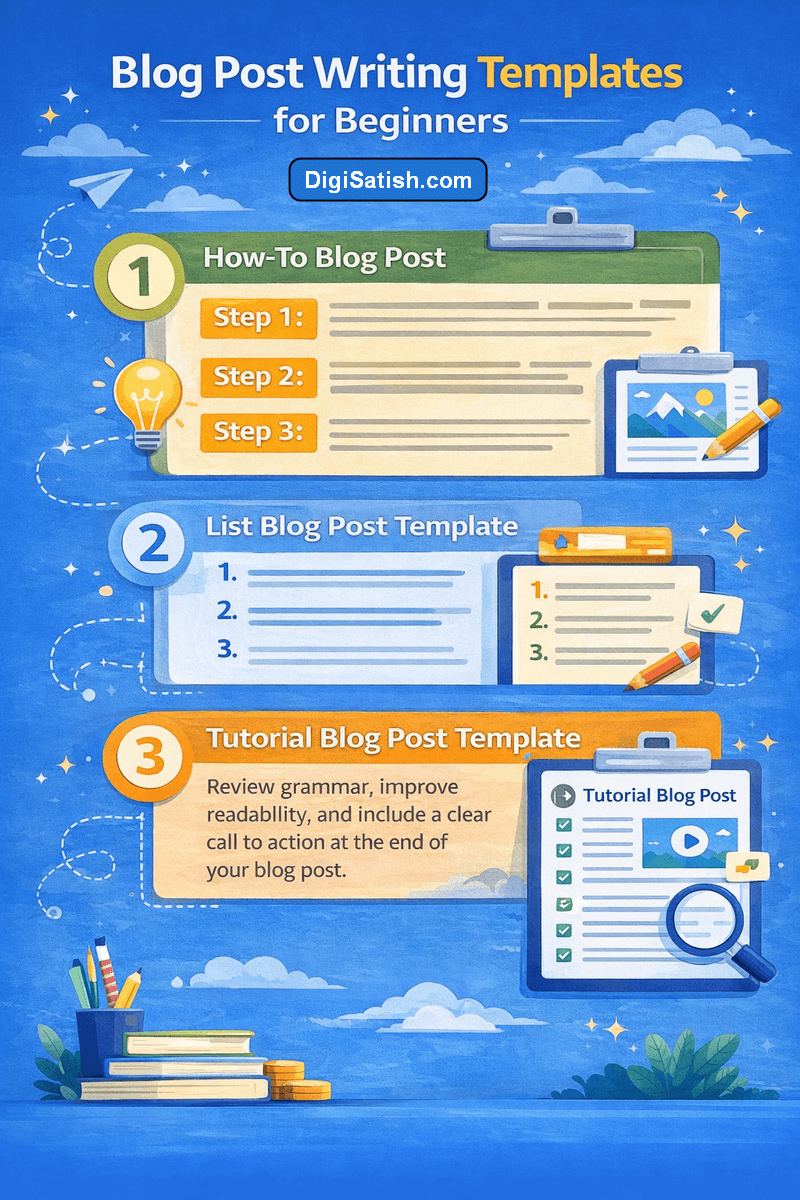
Below are three common blog post templates beginners can use when learning how to write a blog post.
1. How-To Blog Post Template
How-to posts are one of the most popular types of blog content because they directly help readers solve a problem.
Basic structure:
- H1: How to [Solve a Problem or Achieve a Goal]
- Introduction: Explain the problem and what readers will learn
- H2: Step 1
- H2: Step 2
- H2: Step 3
- H2: Step 4
- Conclusion: Summarize the process and encourage readers to take action
Example topic: How to Write a Blog Post for Beginners
This format works well for tutorials, guides, and educational content.
2. List Blog Post Template
List posts organize information into numbered sections, making them easy to read and scan.
Basic structure:
- H1: 10 Ways to Improve Your Blog Writing
- Introduction: Introduce the topic and explain why it matters
- H2: List 1
- H2: List 2
- H2: List 3
- H2: List 4
- Conclusion: Summarize the key points
List posts are highly shareable and often perform well on search engines because readers can quickly find useful tips.
3. Tutorial Blog Post Template
Tutorial posts provide detailed instructions and often include screenshots or examples to guide readers through a process.
Basic structure:
- H1: Complete Tutorial on [Topic]
- Introduction: Explain the goal of the tutorial
- H2: Tools or Requirements Needed
- H2: Step-by-Step Instructions
- H3: Step 1
- H3: Step 2
- H3: Step 3
- H2: Common Problems and Solutions
- Conclusion: Recap and encourage readers to try it themselves
Tutorial posts are especially useful for technical topics, software guides, or educational blog content.
Using templates like these can help beginners write blog posts faster while maintaining a clear structure. As you gain more experience, you can adapt these formats to suit different types of blog content. You can create more engaging articles for your readers.
Recommended Tools for Blog Writing
The right tools don’t just help you write. They help you write the best blog posts more efficiently. They also lead to better results.
Here are the tools that cover every stage of the process. They help from finding competitors’ blog posts to analyze. They assist all the way through to publishing.
These are the tools that make every step of the writing process faster and more effective:
Keyword research tools
- Google Keyword Planner
- Ubersuggest
- Ahrefs
- Semrush
Writing & editing tools
- Grammarly
- Hemingway Editor
- Yoast SEO
- Rank Math
- Google Search Console
Design tools
- Canva
- Unsplash
- Pexels
AI writing tools
- ChatGPT
- Claude
- Jasper
Search engines favor pages that deliver a strong reading experience; pairing your writing with a clean blog design layout dramatically reduces bounce rates.
Blog Post SEO Checklist Before Publishing
Before publishing your blog post, make sure you have completed these steps:
- Use the primary keyword in the title
- Add keyword in first paragraph
- Use H2 and H3 headings
- Add internal links
- Add images with alt text
- Write meta description
Conclusion on How to Write a Blog Post
You now have everything you need to write a blog post that is clear, engaging, and optimized for search engines.
Use this guide as your reference every time you sit down to write. Revisit it whenever you’re stuck. Watch your posts improve with each one you publish.
Writing a great blog post is a skill that gets better with every post you publish. The writing process is simple once you break it down.
First, choose a topic your audience cares about. Then, research the right keywords and create an outline. Write clearly and conversationally. Add visuals and optimize for SEO. Finally, edit before publishing.
The bloggers who consistently produce amazing blog posts are not necessarily more talented than those who struggle. They simply follow a repeatable process and keep improving.
Your first blog post won’t be perfect. That’s completely normal. What matters is that you start writing and build the habit of publishing consistently.
Start with your niche. Pick your first blog post topic. Build your outline today. Write your first draft this week. Every future blog post will be easier than the last.
The best time to start was a year ago — the second-best time is right now.
Frequently Asked Questions (FAQ)
These are the questions most beginners ask when they’re first learning how to write blog articles. Each answer is designed to help you write with more confidence and get your posts live faster.
How do you start writing a blog post?
Start by choosing a specific blog post topic based on what your audience is searching for. Perform keyword research to find your primary keyword, create an outline, and then write your introduction first. Begin with a clear structure. It eliminates writer’s block. This approach keeps your content focused and logical throughout.
What is the ideal length of a blog post?
Most good blog posts range from 1,500 to 3,000 words for SEO-focused content. However, the ideal length depends on the topic. A how-to blog post that covers a complex subject may need over 3,000 words. A simple list post might perform well at 800–1,200 words. Write what’s needed to thoroughly answer the question — no more, no less.
How do beginners write blog posts?
Blogging for beginners starts with picking a niche you know and enjoy. Research what topics your audience searches for. Follow a step-by-step writing process. Use free tools like Google Docs for writing, Grammarly for editing, and Yoast SEO for optimization. Start small, publish consistently, and improve with each new blog post.
What should every blog post include?
Each blog post needs an attention-grabbing title that includes your primary keyword. Start with a compelling introduction. Organize the body content using H2 and H3 headings. Include at least one visual element. Add relevant internal links. End with a conclusion that has a clear call to action. Don’t forget a meta description for SEO. These elements ensure your post is both reader-friendly and search engine optimized.
How do you make a blog post engaging?
To write engaging blog posts, use short paragraphs, simple language, and a conversational tone. Include real examples, bullet point lists for easy scanning, and images to break up text. Ask questions to involve the reader, and always address their specific problem directly. Blog posts that feel personal and helpful hold attention far better than generic informational content.
How do you structure a blog article?
A well-structured blog article follows this format: H1 title with your primary keyword. Include a 2–4 paragraph introduction that hooks the reader. Body sections are organized under H2 and H3 subheadings. Place visuals throughout to support the text. Conclude with a clear call to action. This blog post structure improves both readability and SEO rankings.
What is the 80/20 rule in blogging?
When learning how to write a blog post, use the 80/20 rule wisely. Dedicate 80% of your content to delivering value, such as tips, insights, or storytelling. Use the remaining 20% for promotion, CTAs, or links. This builds trust, increases engagement, encourages shares, improves SEO, and helps you measure results to refine your approach.
How to write a blog post outline?
Start by defining your main idea and target audience. Identify 3 to 5 key points and use them as headings. Add subpoints with examples or evidence. Decide on an introduction, a conclusion, and a call to action. Sequence sections for logical flow and estimate word counts. Review and refine to ensure clarity and purpose.
Discover more from DigiSatish
Subscribe to get the latest posts sent to your email.